
4 October 2026 · TNT Hybrid Team
Strength Training for Fell Runners: Your Winter Plan in the Dales
Racing season is over. Here's how fell runners can use the winter to build strength for faster climbs, more confident descents and fewer niggles, from Settle's hybrid gym.
Your last race of the year is done. The clocks are about to go back, the tops are in cloud more often than not, and your quads still remember that last descent. This is the point where most fell runners either keep grinding out the same miles or stop altogether until spring.
There is a better option. Strength training for fell runners, done properly over the winter, is how you turn up in spring climbing harder, descending with more confidence and picking up fewer niggles. This guide shows you what to train, when, and how to fit it around your running in Settle and the Dales.
Quick answer: Fell runners should do two strength sessions a week over winter, built on slow split squats, step-ups, sled pushes, calf raises and carries, then drop to one session in race season. Start in October with moderate weights, lift heavier through December and January, and make it hill-specific by February. Lifting heavy for low reps builds strength without adding bulk.
Why fell runners need strength training
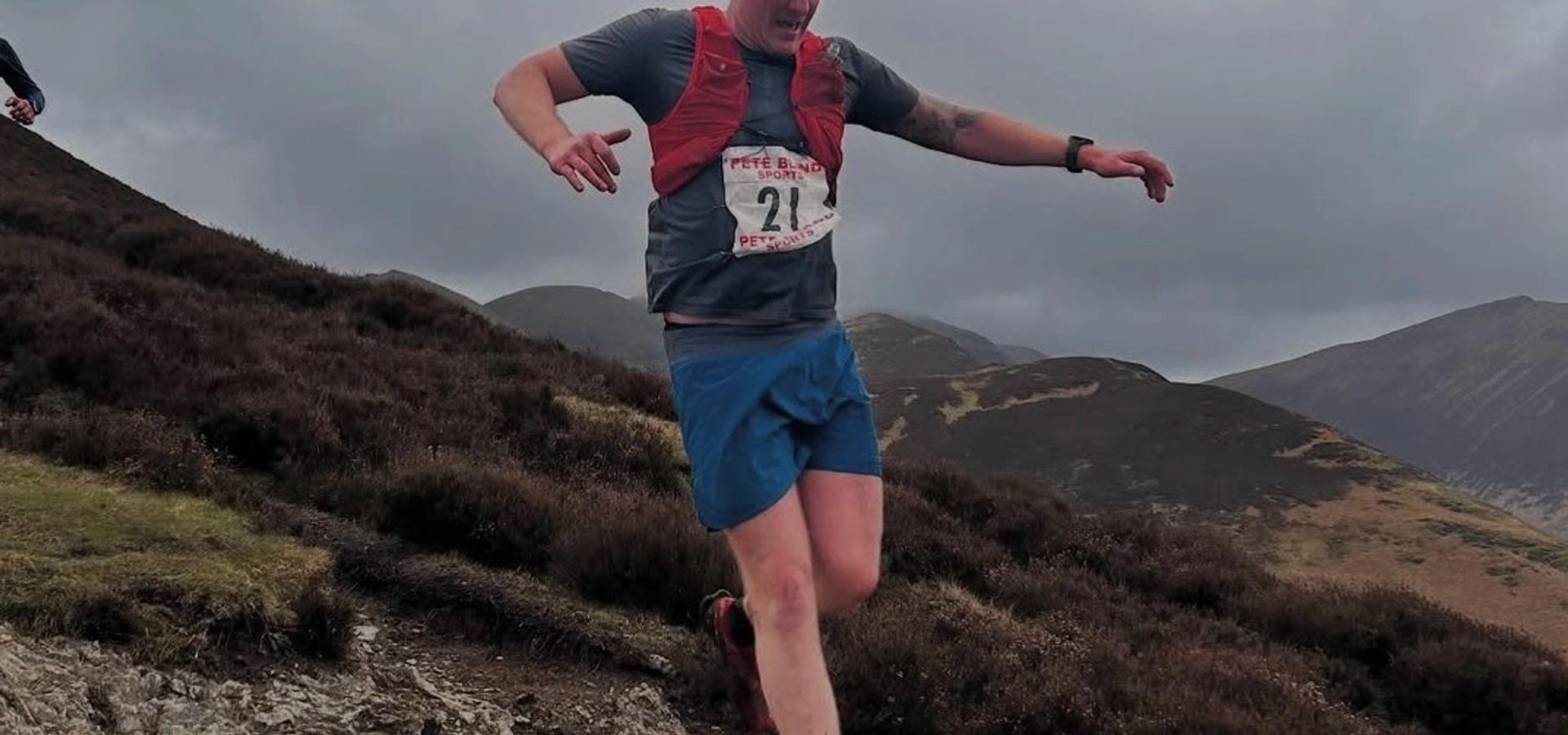
Fell running is not road running with hills added. The ground moves under you. You climb steep, grassy banks with your hands on your knees, then hammer down scree, bog and limestone on the way back.
Each part of that asks something different of your body:
- Descending loads your quads while they lengthen under pressure. That is what leaves you walking down stairs sideways for three days after a race.
- Climbing is driven by your glutes, hamstrings and calves pushing you up, step after step.
- Rough ground tests your ankles, feet and balance on every stride.
- Long days out need a strong trunk to hold your posture when you are tired, often with a pack on.
Running alone builds your engine. It does not build much of the strength that protects you on technical ground. That gap is where most fell running injuries and slow descents come from.
Why October is the right time to start
Autumn is the natural off-season for most fell runners. The big summer races are behind you, and the darker evenings make long midweek runs on the tops harder to fit in.
Strength also takes time. You will feel stronger within a few weeks, but the real change to how your legs handle a descent builds over months. Start in October and you have a full winter to build it before the spring races. For many runners around Settle, that means the Three Peaks Race, which starts and finishes in Horton-in-Ribblesdale.
There is a practical reason too. When it is blowing a gale on Pen-y-ghent, a session in a warm gym is a session done, not a session skipped.
What a winter strength block looks like
Think of the winter in three phases. Each one builds on the last.
Phase 1: Build the base (October to November)
Learn the movements and get your tendons used to load. Use moderate weights, slow lowering and plenty of single-leg work. You should finish sessions feeling worked, not wrecked. Two sessions a week is enough.
Phase 2: Get properly strong (December to January)
Now the weights go up. Fewer reps, heavier loads and longer rests. This is where most runners hold back, and it is the phase that makes the biggest difference. Lifting heavy for low reps builds strength without adding bulk.
Phase 3: Make it hill-specific (February to March)
Keep one heavy session a week and make the second more explosive and specific: step-ups, sled pushes, jumps and loaded carries. As race season gets closer, strength work drops to maintenance and your running takes priority again.
The exercises that matter most on the fells
You do not need fifty exercises. You need a handful of the right ones, done well and progressed over time.
For descending
- Split squats and Bulgarian split squats, lowering slowly over three or four seconds.
- Step-downs from a box, controlling the knee as you lower.
- Squats, front or back, built up steadily over the winter.
Slow lowering trains your quads in exactly the way a descent loads them.
For climbing
- Step-ups onto a high box, driving through the front leg.
- Sled pushes on our two 10m sled tracks. Few things feel more like a steep grassy climb.
- Trap bar deadlifts and hip thrusts for powerful glutes and hamstrings.
For ankles and feet
- Calf raises, both straight-knee and bent-knee, done slowly.
- Single-leg balance work, progressing to an unstable surface or eyes closed.
- Tibialis raises for the muscles at the front of the shin.
For the trunk
- Farmer's carries with heavy dumbbells or kettlebells.
- Side planks and dead bugs to resist twisting and hold your posture.
How to fit strength training around your running
The biggest worry runners have is that lifting will wreck their running. Planned well, it does the opposite.
A few rules we use with runners:
- Keep hard days hard and easy days easy. Lift on the same day as a hard run session, ideally a few hours after it. That leaves your easy days genuinely easy.
- Never lift heavy legs the day before your long run. Saturday on the fells means no heavy squats on Friday.
- Start lighter than you think. First-week soreness can ruin a week of running. Build up over a fortnight.
- Take an easier week every month or so. Drop the weights back and let your body catch up.
- Keep going in season. One short session a week holds on to most of what you built over the winter.
Common mistakes fell runners make in the gym
Lifting too light for too long. Endless high-rep, light-weight circuits build fitness, not strength. Your running already covers fitness.
Skipping single-leg work. Running is one leg at a time. Your training should be too.
Doing it for six weeks, then stopping. Strength fades if you drop it completely. A little, done consistently, beats a lot done once.
Copying a bodybuilding plan. Training for size is a different goal. You want strength relative to your bodyweight, not extra weight to carry up Ingleborough.
Strength training for fell runners at TNT Hybrid
TNT Hybrid was built for exactly this kind of training: strength and engine in the same place. Our co-owner Matt Baines is a fell runner who built the gym with his own hands. He knows what the hills around Settle ask of you.
On the coaching side, Dan Smith is our endurance specialist. He has run marathons and ultras, completed triathlons, and cycled the length of the UK. He understands how to build strength around a big running load without leaving you too tired to run.
Inside our 6,000 sq ft facility at Sowarth Industrial Estate you will find two 10m sled tracks, plate-loaded and pin-loaded machines, free weights, curved runners and a wide range of cardio kit. We are open 5am to 10pm, seven days a week. You can lift before work and still be out on Castleberg or Attermire by the weekend.
Prefer structure? Our strength and conditioning classes in Settle give you coached sessions every week. Want a programme built around your race calendar? Meet our coaches and book in with Dan. Or have a look round the training floor first.
Training for a long day rather than a race? Our Yorkshire Three Peaks training plan uses the same winter approach. Want it coached? See how personal training works at TNT Hybrid.
Frequently asked questions
How often should fell runners do strength training?
Two sessions a week through the winter works well for most runners. Once race season starts, drop to one shorter session a week to hold on to what you have built.
Will lifting weights make me heavier or slower?
Not if you train for strength rather than size. Heavy, low-rep work with plenty of rest builds strength without adding much muscle. Combined with your running, you get stronger without getting heavier.
Should I stop running over the winter?
No. Keep running, but you can ease the volume and intensity while you focus on strength. Easier winter miles plus two good gym sessions is a strong combination going into spring.
I have never lifted before. Where do I start?
Start with bodyweight and light-dumbbell versions of the exercises above and learn the movements first. A few sessions with one of our coaches will get your technique right before the weights go up.
Which membership is best for fell runners?
Most runners only need our Gym Only membership at £50 a month plus a £25 joining fee. If you want coached classes too, look at the 12 or 16 Class Bundles. See all the options on our membership page.
Start your winter block in Settle
The runners who fly up Pen-y-ghent in April are the ones who did the unglamorous work in the gym in November. Start yours now.
Whether you run from Settle, Giggleswick, Langcliffe, Stainforth or Horton-in-Ribblesdale, TNT Hybrid is your base for winter strength. Try a day pass for £10, refunded in full if you join within the week. Founding member spaces are still available.
Call us on 07942 150569, email gym@tnt-hybrid.co.uk, or book through the TNT Hybrid app on iOS and Android. You can also get in touch here or read the story behind TNT Hybrid.