
8 October 2026 · TNT Hybrid Team
Strength Training for Perimenopause in Settle: A Coach's Guide
Feeling weaker, more tired or not yourself? Why strength training matters through perimenopause, how to start, and how to train around your symptoms in Settle.
You feel weaker than you used to. Sleep is patchy, your joints ache, and the training that always worked has stopped working. Too often the advice is to do more cardio and eat less, which usually leaves you more tired, not stronger.
There is a better approach. Strength training for perimenopause can help you keep your muscle, look after your bones and feel more like yourself again. This guide explains why it matters, how to start, and how to train around the symptoms that make some weeks harder than others, from coaches who train women in Settle every week.
Quick answer: Strength training is one of the most useful things you can do through perimenopause. Two or three full-body sessions a week, built on squats, deadlifts, presses, rows, carries and lunges, help you keep muscle and support your bones. Start lighter than you think, add weight steadily, eat enough protein, and train lighter on bad-sleep weeks rather than skipping.
What is perimenopause?
Perimenopause is the transition leading up to menopause. During it, your hormones, especially oestrogen, rise and fall unpredictably before declining. Menopause itself is reached when you have gone 12 months without a period.
Perimenopause can last several years, and every woman's experience is different. Common symptoms include hot flushes, poor sleep, mood changes, brain fog, joint aches and changes in where your body stores fat.
If your symptoms are affecting your daily life, speak to your GP. Training works alongside medical support, not instead of it.
Why strength training matters through perimenopause
It helps you hold on to muscle
We all lose muscle as we age if we do nothing about it. The hormonal changes of perimenopause can make that harder to fight. Strength training is the most direct way to keep the muscle you have and build more.
Muscle is not about looking a certain way. It is what lets you carry the shopping, get up off the floor, walk up Castleberg and keep doing the things you enjoy for decades.
It supports your bones
Bone density tends to fall after menopause as oestrogen drops. Bones respond to load, so lifting weights and weight-bearing exercise are among the best things you can do to support bone health.
It helps you feel capable
There is something powerful about getting stronger at a time when your body can feel unfamiliar. Many women find that regular training lifts their mood and confidence. A heavier deadlift than last month is real, visible progress.
Why more cardio and less food often backfires
Long cardio sessions and cutting food hard is a common response to midlife changes. The problem is what it leaves out.
Without strength work, and with too little food, your body can lose muscle along with fat. You end up tired, hungry and no stronger. Cardio still has a place, especially for your heart. It just works far better alongside strength training than instead of it.
How to start strength training in perimenopause
Focus on the big movements
Build your training around a handful of key patterns:
- Squat: goblet squats, then barbell squats
- Hinge: deadlifts and hip thrusts
- Push: press-ups and dumbbell presses
- Pull: rows and lat pulldowns
- Carry: farmer's carries with dumbbells
- Lunge: split squats and step-ups
These work most of your muscles in a few exercises, and they carry straight over to daily life.
Lift heavier than you think
Women are often handed the lightest dumbbells in the rack and told to do lots of reps. You are stronger than that. The weight should feel challenging by the last few reps of each set, while your technique stays solid.
Build up gradually. When a set feels comfortable, add a little weight. That steady increase over weeks and months is what drives results.
Train two or three times a week
Two full-body strength sessions a week is a great start. Three is better once you are used to it. Leave at least a day between sessions to recover.
Eat enough, especially protein
Your muscles need fuel to respond to training. Include a good source of protein at each meal and do not cut food drastically while you are trying to get stronger. If you want specific nutrition advice, a registered dietitian or your GP is the right place to start.
Make recovery part of the plan
Poor sleep affects how well you recover. On weeks when sleep is bad, it is fine to train a little lighter. Showing up and doing something beats skipping it entirely.
Training around your symptoms
Some weeks will be harder than others. A few practical adjustments help:
- Hot flushes: wear layers, keep water close and train near a fan. Many women find early sessions easier. We open at 5am every day.
- Joint aches: give yourself a longer warm-up and add some mobility work. Pilates can be a great complement to lifting.
- Low-energy days: do a shorter session. Twenty minutes of focused work still counts.
- Pelvic floor changes: if you notice leaking during jumping or heavy lifting, tell your coach and speak to your GP or a women's health physiotherapist. Your coach can adjust exercises while you get it checked.
A simple week to get you started
- Day 1: Full-body strength, around 45 minutes
- Day 2: A walk, a Pilates class or rest
- Day 3: Full-body strength
- Weekend: A longer walk in the Dales. The Ribble riverside path from Settle to Stainforth is a lovely one.
Keep it simple for the first month. Consistency matters far more than the perfect plan.
Strength training for women at TNT Hybrid
Rebecca Preston has been a personal trainer for nearly ten years and specialises in peri- and post-menopausal women. She helps women train effectively and adapt their lifestyle so they feel strong and confident through this stage of life. You can read more about Rebecca and the rest of the team on our trainers page.
Prefer one-to-one coaching? Here is how personal training at TNT Hybrid works.
If you prefer to train with others, our Women's Group PT sessions run on weekday mornings in a smaller, supportive group. Avril Stapleton's Pilates classes are a great way to work on core strength and mobility alongside your lifting. See all the times on our classes page.
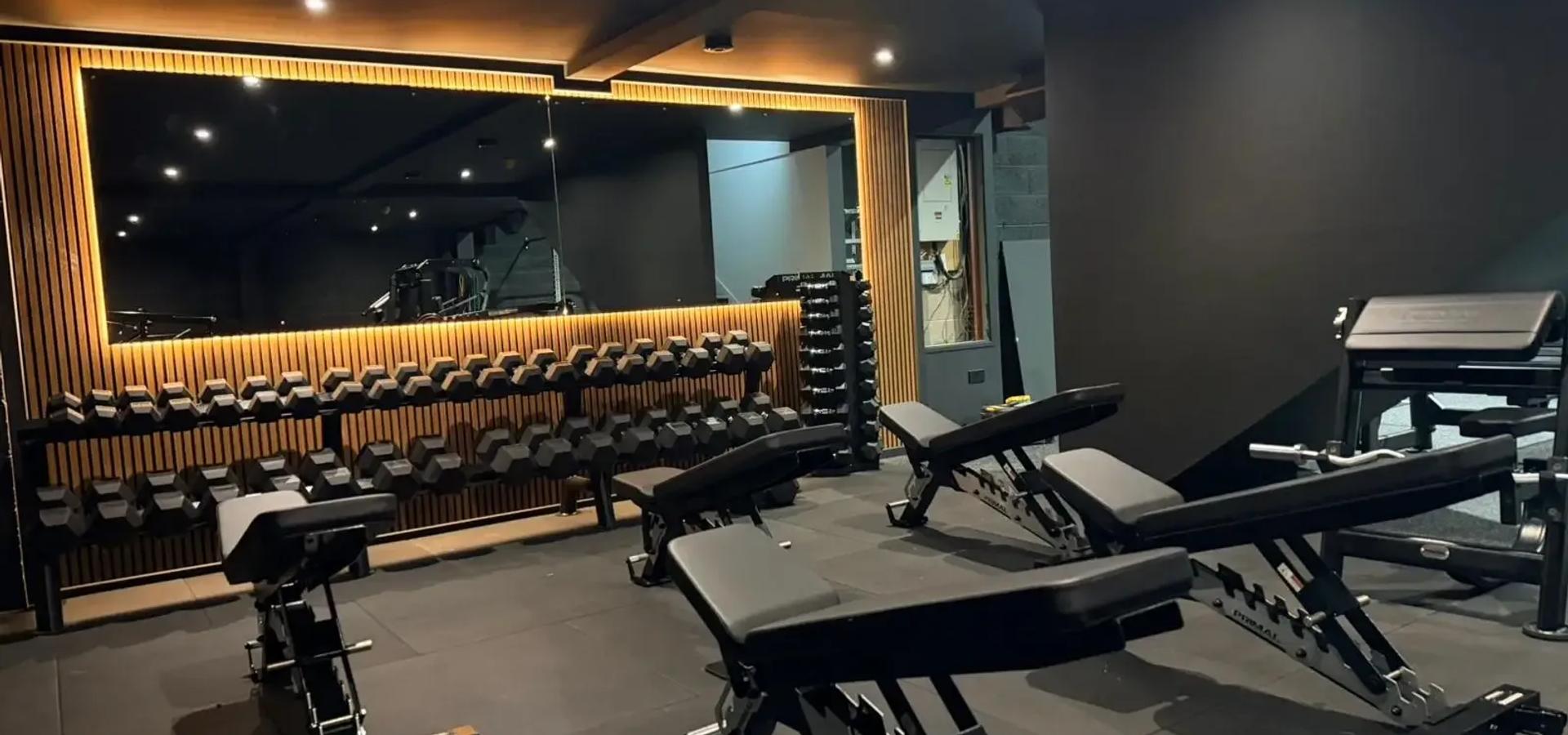
Our training floor has a full range of dumbbells, adjustable benches and plate-loaded and pin-loaded machines. Machines are a great way to build confidence while you learn the free-weight movements. Have a look round the training floor.
Frequently asked questions
Is it safe to lift heavy weights during perimenopause?
For most women, yes, as long as you build up gradually with good technique. If you have a medical condition such as osteoporosis or a heart condition, check with your GP first and tell your coach so they can plan around it.
Will strength training help with weight gain around my middle?
Strength training helps you build and keep muscle, which supports healthier body composition over time. Results depend on your nutrition, sleep and stress too. Getting stronger is a better goal than chasing a number on the scales.
I'm in my late forties and have never lifted. Is it too late?
No. You can build strength at any age. Start with lighter weights and simple movements, learn the technique properly, and progress from there. A few sessions with a coach will get you started safely.
How soon will I notice a difference?
Most people find movements start to feel easier within a few weeks of consistent training. Bigger changes in strength and muscle build over months, so think of this as a long-term habit.
Should I speak to my GP before starting?
If your symptoms are affecting your daily life, or you have a medical condition, yes. Your GP can talk you through options such as HRT. Strength training works well alongside whatever support you choose.
Which membership is best for getting started?
If you want coaching built in, our 12 Class Bundle at £60 a month has no joining fee. For full gym access and every class, Unlimited is £90 a month plus a £25 joining fee. See every plan on our membership page.
Get stronger through perimenopause in Settle
You do not have to accept feeling weaker as part of getting older. With the right training, this can be the strongest stage of your life.
TNT Hybrid welcomes women from Settle, Giggleswick, Langcliffe, Clapham, Ingleton, Bentham and across the Dales. Come and see us at Unit 10 Sowarth Industrial Estate. Founding member spaces are still available.
Want to see the space first? Try a day pass for £10, refunded in full if you join within the week.
Call us on 07942 150569, email gym@tnt-hybrid.co.uk, or book through the TNT Hybrid app on iOS and Android. Not sure where to start? Get in touch and we will put you in touch with Rebecca, or read the story behind TNT Hybrid.
This article is general guidance and not medical advice. Speak to your GP about any symptoms or health concerns.