
9 October 2026 · TNT Hybrid Team
Strength and Conditioning in Settle: Build Strength Without Losing Fitness
Want to get stronger without losing your fitness? How strength and conditioning works, a simple weekly plan, and where to train it in Settle.
You start lifting and your running gets worse. You get fitter and your strength stalls. Most people end up picking a side, because doing both at once seems to leave you tired and going nowhere.
It does not have to work like that. This guide explains how strength and conditioning in Settle can build strength without costing you your fitness: what to train, how to organise your week, and where to do it properly in the Dales.
Quick answer: To build strength without losing conditioning, lift heavy two or three times a week, keep most of your cardio easy, and put your hardest sessions on separate days or well apart. Use low-impact tools like sleds, rowers and ski ergs for hard conditioning, and eat and sleep enough to recover. TNT Hybrid in Settle runs Strength, Metcon and Strength & Conditioning classes built around this.
What is strength and conditioning?
Strength and conditioning, usually shortened to S&C, is training that builds two things together. Strength is how much force you can produce: lifting, pushing, pulling and carrying. Conditioning is your engine: how long you can work hard and how quickly you recover between efforts.
Athletes have trained this way for years, because sport rarely asks for just one of them. A rugby player needs to tackle and then sprint. A fell runner needs to climb and then hold a pace for hours. Day to day, most of us need both too: carrying shopping up a hill, playing with the kids, or getting through a long day on our feet.
At TNT Hybrid this is simply how we train. If you want the wider picture, our beginner's guide to hybrid training explains the idea in more detail.
Why strength and fitness seem to fight each other
If you have tried to do both and felt worse, you are not imagining it. Done badly, strength work and conditioning get in each other's way. Here is what usually goes wrong:
- Everything is hard. Every session is a maximal lift or a lung-busting circuit. Your body never gets the easy work it needs to recover and adapt.
- Hard sessions are stacked. Heavy squats on Monday morning, hard intervals on Monday night, then more legs on Tuesday. Nothing gets done well.
- Too much running, too soon. Lots of hard road miles on top of heavy legs is a common recipe for sore knees and stalled lifts.
- Under-eating. Training more while eating less leaves you without the fuel to get stronger or fitter.
- No plan. Random workouts feel productive, but without progression you end up roughly where you started.
Fix those five things and the two qualities stop competing. In our experience coaching members every day, most people find they can get stronger and fitter at the same time once the week is organised properly.
How to build strength without losing conditioning
1. Lift heavy, but leave a rep or two in reserve
Strength comes from lifting challenging weights and adding to them over time. It does not come from grinding every set to failure. Finish most sets feeling you could have done one or two more reps with good form. You recover faster, and you still have something left for your conditioning work.
Build each strength session around a few big movements: a squat, a hinge such as a deadlift, a push, a pull and a carry. Two or three of these sessions a week is enough for most people.
2. Keep most of your conditioning easy
This is the part people resist. A lot of your engine is built with steady, conversational work: an easy jog along the Ribble, a long walk on the hills, or 30 minutes on the rower at a pace you could hold all day.
Easy work builds your aerobic base without draining the energy you need for lifting. Save genuinely hard efforts for one or two sessions a week.
3. Separate your hardest sessions
Give your heavy leg day and your hardest conditioning session some space. Ideally put them on different days. If they have to share a day, do them several hours apart, and do whichever matters most to you first.
4. Use the right tools for hard conditioning
You do not have to run for every hard session. Sled pushes, rowing, the ski erg and the air bike all let you work very hard with far less pounding on your joints than repeated hard running. Our two 10m sled tracks get plenty of use for exactly this.
That matters if you are also trying to squat heavier. Less impact means fresher legs for your next strength session.
5. Eat and sleep like you are training for two things
Because you are. Eat regular meals with a good source of protein in each, do not slash your food while trying to improve, and treat sleep as part of the plan. If you want specific nutrition advice, a registered dietitian is the right person to ask.
A simple strength and conditioning week
Here are two ways to set up your week. Adjust the days to fit your life.
Three days a week
- Day 1: Full-body strength. Squat, press, row, carry.
- Day 2: Conditioning. Intervals on the rower, ski erg or sled, then some easy steady work.
- Day 3: Full-body strength. Deadlift, pull-ups or pulldowns, lunges, carry.
Add an easy walk or jog on one or two other days if you can.
Four days a week
- Monday: Lower-body strength.
- Tuesday: Hard conditioning: intervals or a Metcon class.
- Thursday: Upper-body strength plus a short sled finisher.
- Saturday: Long, easy conditioning: a hill walk, a run or a long row.
Rest days are not optional extras. They are when the adaptation happens.
Strength and conditioning for sport in the Dales
Plenty of people around Settle play or race, and S&C is how you get better at your sport without getting hurt.
- Rugby and football: if you play for a local side such as North Ribblesdale RUFC or Settle United, heavy lower-body work, sprint conditioning and plenty of single-leg training will help you hit harder and last longer.
- Fell running: strength protects you on the descents and drives you up the climbs. Our winter strength plan for fell runners goes into detail.
- Hyrox: the race is strength and conditioning turned into an event. See our Hyrox training guide.
- Big days in the hills: our Yorkshire Three Peaks training plan uses the same principles.
Strength and conditioning at TNT Hybrid in Settle
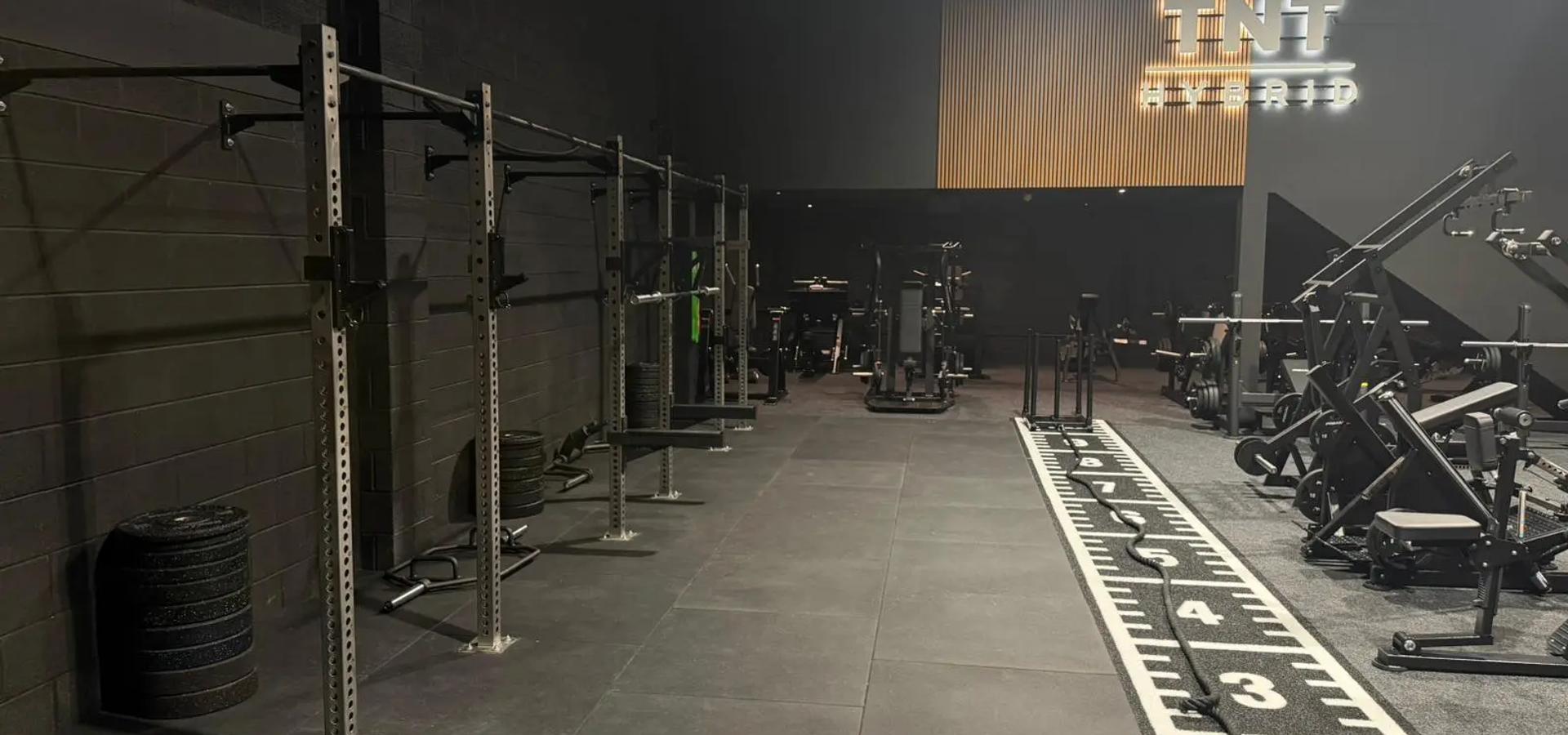
TNT Hybrid is a 6,000 sq ft facility at Sowarth Industrial Estate, built for training strength and conditioning side by side. You will find racks, barbells, bumper plates and dumbbells in the strength zone; turf, sleds, ropes and kettlebells in the functional area; two 10m sled tracks; and rowers, ski ergs, air bikes and curved treadmills in the class area. See it all on the training floor.
If you would rather follow a coached plan, three classes do most of the work:
- Strength & Conditioning: compound lifts paired with conditioning work. Thursdays at 6pm.
- Strength: structured lifting sessions. Mondays, Wednesdays and Fridays, including 6am slots.
- Metcon: harder conditioning that mixes strength and cardio. Tuesdays, Fridays and Saturday mornings.
Times can change, so check the latest on our classes page or in the app.
Our coaches train this way themselves. Co-owner Tomi Tatham is a former professional boxer, ranked number four in the UK at light heavyweight, who has since competed in strongman, powerlifting and Hyrox. Louise Coates coaches powerlifting, CrossFit-style training, Hyrox, circuits and HIIT. Finn Rayner is a Level 3 PT studying Sport and Exercise Science at Lancaster University, with a background in rugby, football, boxing, running and Hyrox. Meet the full team, or read how personal training works if you want a plan built around your sport.
Frequently asked questions
Can you build strength and endurance at the same time?
Yes. Keep most of your conditioning easy, lift heavy two or three times a week, and keep your hardest sessions apart. Organised that way, most people get stronger and fitter together.
How many days a week should I do strength and conditioning?
Three days is a strong start: two strength sessions and one conditioning session. Four days lets you split upper and lower body and add a longer, easy session at the weekend.
Should I lift or do cardio first?
Do whichever matters most to you first, while you are fresh. If both are hard, put them on separate days or several hours apart.
Is strength and conditioning good for beginners?
Yes. Every movement can be scaled to your level, and a coach will start you with lighter weights and simple versions. Strength and Evolve classes are good places to begin.
Which TNT Hybrid membership suits strength and conditioning?
Unlimited at £90 a month plus a £25 joining fee covers every class and the gym floor. If you follow your own programme, Gym Only is £50 a month. Compare plans on our membership page.
Start strength and conditioning in Settle
Whether you train from Settle, Giggleswick, Langcliffe, Clapham, Ingleton or Bentham, TNT Hybrid is your base for getting stronger without losing your fitness. Try a day pass for £10, refunded in full if you join within the week. Founding member spaces are still available.
Call us on 07942 150569, email gym@tnt-hybrid.co.uk, or book through the TNT Hybrid app on iOS and Android. You can also get in touch here or read the story behind TNT Hybrid.